
Entertainment
Donna the Buffalo: The Complete Guide to the Roots, Music, Albums, and Legacy in 2026


Donna the Buffalo is an American roots band whose music brings together folk, Americana, country, rock, zydeco, Cajun influences, reggae, and old-time traditions. Formed in the Finger Lakes region of New York, the group has developed a distinctive identity over more than three decades, supported by an unusually dedicated audience and a strong connection to live music and community festivals.
What makes Donna the Buffalo especially interesting is that the band has never depended on a single genre. Its music can move from energetic dance rhythms to Appalachian-inspired fiddle passages, roots-rock arrangements, and songs shaped by Caribbean and Louisiana traditions. At the center of that sound are Tara Nevins and Jeb Puryear, whose songwriting and musicianship have remained fundamental to the group’s identity.
Donna the Buffalo: History and Origins
Donna the Buffalo emerged from the Trumansburg, New York, and Ithaca-area music community in the late 1980s. The group’s history is closely connected with old-time Appalachian music and the local community of musicians who gathered to play traditional styles. AllMusic dates the band’s formation to 1989, while historical accounts describe the project taking shape around 1987–1988 before the band’s first public performances.
Tara Nevins and Jeb Puryear became the central creative partnership. Their musical backgrounds helped establish the combination of fiddle-based traditional music, electric guitar, accordion, percussion, and rhythm that eventually became a defining feature of Donna the Buffalo.
The band’s unusual name also has an unusual story. The musicians initially considered the name “Dawn of the Buffalo,” but it was misunderstood as “Donna the Buffalo.” Instead of correcting the mistake, they adopted the unexpected name. The result became one of the most recognizable names in American roots music.
What Kind of Music Does Donna the Buffalo Play?
Trying to put Donna the Buffalo into one musical category misses much of what makes the group distinctive. The band is commonly associated with roots music, Americana, folk rock, jam music, zydeco, country, and contemporary folk. AllMusic describes its catalog as drawing from rock, jazz, country, zydeco, and folk, while Apple Music emphasizes the group’s mixture of folk, zydeco, and country influences.
The band’s sound is particularly recognizable because traditional instruments and modern rock instrumentation exist side by side. Fiddle, accordion, washboard, acoustic guitar, electric guitar, keyboards, bass, and drums can all contribute to the arrangements.
Tara Nevins’ musical approach is especially important. Her work with fiddle and accordion gives many performances a strong traditional and Louisiana-inspired character, while Jeb Puryear’s guitar playing and songwriting provide another foundation for the band’s roots-rock identity.
The result is music designed not only for listening but also for dancing and communal live experiences. This emphasis has helped Donna the Buffalo remain strongly connected to festivals and touring audiences.
Tara Nevins and Jeb Puryear: The Creative Core
Although Donna the Buffalo has experienced numerous lineup changes throughout its history, Tara Nevins and Jeb Puryear have remained the essential creative figures. Both have contributed vocals and songwriting, while their instrumental roles help define the group’s musical personality.
Nevins is known for vocals, fiddle, accordion, guitar, washboard, and percussion, while Puryear has been strongly associated with vocals and guitar. Their partnership combines different aspects of American roots music without allowing the band to become restricted to one traditional style.
The longevity of that partnership is significant. Many groups change their musical identity dramatically as personnel changes, but Donna the Buffalo has retained recognizable characteristics across different eras. The songwriting partnership has provided an anchor while other musicians have brought new ideas and interpretations to the band’s live and recorded sound.
That combination of continuity and evolution is one reason the group has maintained a dedicated following for so many years.
Donna the Buffalo Albums and Discography
Donna the Buffalo has released a substantial body of work spanning several decades. Among the important releases are The Ones You Love, Rockin’ in the Weary Land, Positive Friction, Life’s a Ride, Silverlined, Tonight, Tomorrow and Yesterday, and Dance in the Street.
The band’s early recordings included The White Tape in 1989 and The Red Tape in 1991, followed by the self-titled 1993 album often referred to as the “Purple CD.” These early releases helped establish the band’s regional following and distinctive roots-oriented approach.
The Ones You Love, released in 1996, became an important part of the band’s catalog. Rockin’ in the Weary Land followed in 1998, and Positive Friction arrived in 2000. The latter remains one of the group’s most frequently highlighted albums when discussing its recorded legacy.
The 2000s brought further development, including Life’s a Ride in 2005 and Silverlined in 2008. In 2013, the group released Tonight, Tomorrow and Yesterday, an album noted for its combination of Americana, folk, zydeco, and roots influences.
The band’s later studio catalog includes Dance in the Street, released in 2018. The album continued the group’s long-standing interest in rhythmic, roots-oriented music and live-feeling performances.
The Herd and Donna the Buffalo’s Live-Music Culture
One of Donna the Buffalo’s greatest achievements is the community surrounding its performances. Fans of the group are commonly known as “The Herd,” a name that reflects the unusually close relationship between the musicians and their audience.
The band’s live reputation is central to its identity. Rather than treating concerts simply as opportunities to reproduce studio recordings, Donna the Buffalo has developed a performance culture centered on energy, improvisation, dancing, and audience participation.
This helps explain why the band has remained relevant to festival audiences even as musical trends have changed. Its concerts can function as social gatherings as much as conventional performances.
For listeners discovering the group in 2026, exploring live recordings can therefore be just as valuable as beginning with the studio albums.
Finger Lakes GrassRoots Festival and Community Legacy
Donna the Buffalo’s connection to festivals goes far beyond performing at them. The musicians helped establish the Finger Lakes GrassRoots Festival of Music and Dance in Trumansburg, New York, in 1991. The festival became an important cultural event and an extension of the band’s community-oriented approach.
The event began as a much smaller community benefit and grew into a major multi-day gathering. Its development demonstrates how Donna the Buffalo’s musical identity has always been connected to community, dancing, cultural exchange, and grassroots organization.
The band’s festival involvement also helped create opportunities for artists from different musical traditions to share audiences. That philosophy mirrors Donna the Buffalo’s own music, which combines American roots traditions with international influences.
This community legacy is an important part of understanding the band. Donna the Buffalo is not simply a recording act; it represents a broader roots-music culture built around live performance and shared experiences.
Why Donna the Buffalo Still Matters in 2026
Donna the Buffalo lasting appeal comes from its ability to combine tradition and experimentation without losing its personality. The group emerged from an old-time music environment but developed a sound that could include zydeco, reggae, country, rock, folk, and Americana.
More than three decades after its formation, the band remains an important example of how an independent roots group can build a lasting audience through songwriting, touring, festivals, and community.
For new listeners, a good introduction can begin with The Ones You Love, Positive Friction, Silverlined, Tonight, Tomorrow and Yesterday, or Dance in the Street, followed by live performances to understand the band’s festival-oriented energy.
Ultimately, Donna the Buffalo represents more than a particular genre. Its history demonstrates the power of musicians who preserve traditional influences while continually reshaping them. Through Tara Nevins, Jeb Puryear, its changing ensemble, devoted Herd, extensive touring history, and festival work, the band has created a distinctive place in American roots music that remains recognizable in 2026.

Sight Reading Factory is an online music education platform designed to help musicians improve their sight-reading skills through customizable musical exercises. It provides students, teachers, instrumentalists, vocalists, and music educators with a practical way to practice reading unfamiliar music and develop greater confidence when performing. Instead of relying exclusively on printed exercises that students may eventually memorize, the platform can generate new musical examples to support repeated practice and ongoing development.
Sight-reading is an essential skill in music. It involves reading and performing a piece of music that a musician has not previously studied in detail. This requires the ability to recognize notes, understand rhythms, interpret musical symbols, maintain a steady tempo, and translate written notation into sound. Developing these abilities takes consistent practice, and Sight Reading Factory aims to make that process more structured, accessible, and adaptable to different skill levels.
In 2026, digital music-learning tools remain useful for classroom instruction, private lessons, independent practice, and ensemble preparation. Sight Reading Factory addresses a common challenge faced by music educators: providing enough fresh, appropriately challenging material for every student. By allowing exercises to be customized, the platform can support individualized learning while helping teachers organize regular sight-reading activities.
What Is Sight Reading Factory?
Sight Reading Factory is an online platform focused on building music-reading proficiency through generated exercises. It is designed for use across different musical contexts, including instrumental performance and vocal study. Its main purpose is to give learners opportunities to practice reading unfamiliar notation rather than depending on a small collection of repeatedly used examples.
Traditional sight-reading instruction often involves textbooks, worksheets, method books, and exercises selected by a teacher. These resources remain valuable, but students may become familiar with the same passages after practicing them several times. A platform that generates new examples can help reduce that familiarity and encourage musicians to apply their reading skills to fresh material.
Sight Reading Factory helps make music practice repeatable and customizable. Depending on the selected instrument, exercise type, and available account features, users can work with settings that determine aspects of the musical material. This allows practice to focus on particular learning objectives rather than presenting every student with the same exercise.
For example, a beginner might concentrate on identifying notes within a limited range and recognizing basic rhythmic patterns. A more experienced musician might practice complicated rhythms, accidentals, wider pitch ranges, or more advanced notation.
The platform is particularly relevant to music teachers who need a consistent way to assign practice and introduce students to unfamiliar music. Students can use it to supplement their regular lessons, while independent musicians can incorporate short reading exercises into their daily routines.
Key Features of Sight Reading Factory
Sight Reading Factory focuses on providing flexible practice material that can be adapted to different musicians and educational goals. Its usefulness comes from the way it supports repeated exposure to unfamiliar notation and allows teachers to organize practice around specific skills.
1. Customizable Music Exercises
One of the platform’s central advantages is the ability to generate exercises based on selected musical parameters. Depending on the exercise type and available settings, users can tailor practice to their instrument, level of difficulty, note range, and rhythmic requirements.
This flexibility helps learners concentrate on areas where they need improvement. A student who struggles with ledger lines, for instance, can focus on reading notes beyond the standard staff. Another student might need more experience recognizing rests, dotted rhythms, or time signatures.
2. Fresh Examples for Repeated Practice
Sight-reading improves when musicians regularly encounter unfamiliar material. Practicing the same passage repeatedly can improve performance of that passage, but it does not always demonstrate whether a learner can transfer those skills to new music.
By providing generated exercises, Sight Reading Factory can help users practice responding to new notation. This encourages active reading instead of relying on memory or muscle familiarity.
3. Support for Music Teachers
Teachers can use sight-reading exercises as part of classroom activities, private lessons, homework assignments, and assessments. Rather than searching through multiple books for an appropriate passage, an educator can use customizable material to target particular learning outcomes.
This can be especially useful in classrooms where students have different levels of experience. Individualized exercises allow teachers to provide additional challenges to advanced musicians while giving beginners manageable material.
4. Instrumental and Vocal Practice
Sight-reading is important for both instrumentalists and singers. Instrumental musicians must connect written notes with fingerings, playing techniques, and physical movements. Vocalists must interpret pitches, intervals, rhythms, and other musical instructions while preparing to sing.
The platform’s available exercise options depend on the selected musical category and account features. Users should check the official website to confirm which instruments, vocal formats, and settings are supported by their current plan.
How to Use Sight Reading Factory Step by Step
Getting started with Sight Reading Factory is straightforward when users approach it with a clear practice objective. The following process provides a useful starting point for beginners, students, and teachers.
Step 1: Visit the Official Website
Open sightreadingfactory.com and review the available options. Check whether you need an individual, student, or educator account for your intended use.
Step 2: Select Your Instrument or Exercise Type
Choose the relevant musical category and review the available settings. Beginners should start with a comfortable note range and simple rhythms rather than choosing the hardest material immediately.
Step 3: Review the Exercise Before Playing
Identify the clef, key signature, time signature, tempo marking, and any unusual rhythmic patterns. Previewing these details helps you prepare without memorizing the entire passage.
Step 4: Perform the Music Without Stopping
Aim to maintain a steady pulse and continue through small mistakes. The objective is to develop the ability to read ahead and recover while performing unfamiliar music.
Step 5: Review Mistakes and Practice Again
Identify recurring difficulties, such as incorrect pitches or uneven rhythms. Adjust the next exercise to address those weaknesses, then gradually increase the difficulty as your accuracy improves.
The most important principle is consistency. A short, focused session several times a week can be more productive than an occasional long session without a specific goal.
Benefits of Sight Reading Factory for Students and Teachers
Sight Reading Factory can support music education by making it easier to practice an important skill consistently. Its benefits depend on how learners use the exercises, how often they practice, and whether the material matches their current abilities.
Improved note recognition: Regular exposure to unfamiliar notation helps musicians recognize notes more quickly. As recognition becomes more automatic, students can devote greater attention to phrasing, expression, and overall musical flow.
Better rhythmic accuracy: Sight-reading requires musicians to interpret note values, rests, ties, and time signatures while maintaining a consistent beat. Targeted exercises can help learners identify rhythmic patterns and perform them more confidently.
Greater performance confidence: Unfamiliar music can feel intimidating, particularly for beginners. Frequent practice helps students become more comfortable approaching new passages without expecting to know every note in advance.
Personalized learning: Students do not all develop at the same pace. Customizable practice allows teachers to focus on individual weaknesses and adjust the level of difficulty as students progress.
More efficient lesson preparation: Educators can use digital exercises to supplement textbooks and printed worksheets. This can reduce the time spent searching for suitable examples and make it easier to assign material that matches a lesson’s objectives.
Independent learning: Musicians who practice outside formal lessons can use structured exercises to establish a routine. By recording personal observations about accuracy, tempo, and recurring mistakes, they can monitor their progress more effectively.
However, the platform works best as a supplement to a broader music education program. It does not replace technique exercises, repertoire study, ear training, musical interpretation, or feedback from an experienced teacher.
Sight Reading Factory Pricing, Free Access, and Subscription Options
A common question is whether Sight Reading Factory is free. The answer depends on the current access options, the type of account, and whether a school or music educator provides access.
The platform has offered different arrangements for individual users and educational institutions. Because prices, trial availability, and subscription conditions can change, we recommend checking the official website rather than relying on outdated pricing information.
Before choosing a plan, consider the following points:
Individual access: Determine whether the available plan suits personal practice and includes the exercise options you need.
Teacher access: Review the tools available for assigning exercises, managing students, and supporting classroom instruction.
School access: Ask whether your school or music department already provides an institutional subscription.
Exercise availability: Confirm that your preferred instrument, vocal category, and customization settings are included.
Renewal and cancellation: Review billing frequency, renewal terms, and cancellation conditions before paying.
Visit Sight Reading Factory’s official website for current account and subscription information.
It is also worth comparing the cost with your expected usage. A music teacher who assigns exercises to several classes may have different needs from a hobbyist who practices piano for ten minutes each day. Choosing a suitable option depends on the features that will genuinely support your learning goals.
Sight Reading Factory vs. Traditional Music Practice Methods
Sight Reading Factory and traditional music resources can complement each other, but they serve somewhat different purposes.
| Feature | Sight Reading Factory | Traditional printed exercises |
|---|---|---|
| Exercise variety | Can generate new exercises using available settings | Usually uses a fixed collection of passages |
| Customization | Offers configurable practice options | Depends on the book or worksheet selected |
| Accessibility | Available through a compatible internet-connected device | Can be used without internet access |
| Classroom use | Supports digital exercise-based instruction | Supports printed assignments and in-person work |
| Repeated practice | Useful for encountering unfamiliar examples | Repeated passages can become familiar |
| Learning approach | Digital, customizable practice | Structured lessons and established repertoire |
Neither method is automatically better for every musician. Printed method books often provide carefully sequenced instruction, musical context, and exercises that build progressively on earlier concepts. Digital platforms offer convenience and the possibility of practicing with a wide range of generated examples.
The strongest approach combines both methods. Students can use Sight Reading Factory to develop fluency with unfamiliar notation while studying scales, technical exercises, and complete musical works through traditional instruction.
Musicians should also practice reading music away from their primary instrument when appropriate. Silently identifying notes, tapping rhythms, and recognizing intervals can strengthen foundational skills before a passage is performed.
Best Tips for Improving Sight-Reading Skills in 2026
Using Sight Reading Factory regularly is helpful, but the quality of practice matters as much as the number of exercises completed. A thoughtful routine helps musicians build accuracy, confidence, and consistency over time.
Start below your maximum ability. Choose exercises that challenge you without making every measure difficult. If you repeatedly lose the beat or cannot identify basic notes, reduce the complexity until you can maintain a steady performance.
Look ahead while playing. Effective sight-reading involves reading slightly ahead of the notes being performed. This gives the brain time to process upcoming rhythms and pitches instead of reacting only after each note has passed.
Maintain a steady tempo. Beginners often stop whenever they make a mistake. During sight-reading practice, try to continue through small errors and return to the correct position at the next opportunity. This develops musical continuity.
Recognize patterns instead of isolated notes. Scales, arpeggios, repeated rhythms, and familiar intervals appear throughout written music. Recognizing these patterns reduces the mental effort required to process every note separately.
Practice consistently. Set aside five to fifteen minutes for focused sight-reading on most practice days, adjusting the duration to your experience and schedule. Brief sessions make it easier to maintain concentration and establish a lasting habit.
Review mistakes after performing. Once the exercise is complete, identify the most important errors. Determine whether they came from poor note recognition, unfamiliar rhythms, instrument technique, or difficulty maintaining the pulse. Use that information to choose the next exercise.
Finally, measure progress over several weeks rather than judging your ability by one difficult passage. Increasing accuracy, improved rhythm, and greater confidence when encountering new music are meaningful signs of development.
Frequently Asked Questions About Sight Reading Factory
What is Sight Reading Factory used for?
Sight Reading Factory is used to practice reading unfamiliar musical notation. Students, instrumentalists, vocalists, and music teachers can use its generated exercises to develop note recognition, rhythmic accuracy, and reading fluency.
Can beginners use Sight Reading Factory?
Yes. Beginners can benefit from starting with simple exercises that match their current knowledge of notes, clefs, and rhythms. Gradually increasing difficulty helps them build confidence without becoming overwhelmed.
Is Sight Reading Factory suitable for music teachers?
Yes. The platform is designed to support music education and can help teachers provide practice material suited to different learning objectives. Educators should review the current account features to determine which classroom tools are available.
Does Sight Reading Factory support different instruments?
The platform offers instrument-specific sight-reading options. The exact instruments, exercise categories, and customization features should be confirmed on its official website.
How often should we practice sight-reading?
Regular practice is recommended. Beginners may start with five to ten minutes per session, while more experienced musicians can extend their sessions according to their goals. Consistency and appropriate difficulty are more important than simply completing a large number of exercises.
Conclusion: Is Sight Reading Factory Worth Using in 2026?
Sight Reading Factory is a useful digital resource for musicians who want to improve their sight-reading skills through regular, customizable practice. Its generated exercises can help students encounter unfamiliar notation, strengthen rhythmic accuracy, and become more confident when performing music they have not rehearsed.
For teachers, the platform offers a practical way to supplement lessons and provide students with additional reading opportunities. For independent learners, it can help establish a structured practice routine that targets specific weaknesses and encourages gradual improvement.
The best results come from combining digital exercises with sound musical fundamentals, including scales, ear training, technique, repertoire study, and guidance from qualified instructors. By choosing appropriate exercises, maintaining a steady pulse, reviewing mistakes, and practicing consistently, musicians can make meaningful progress over time.
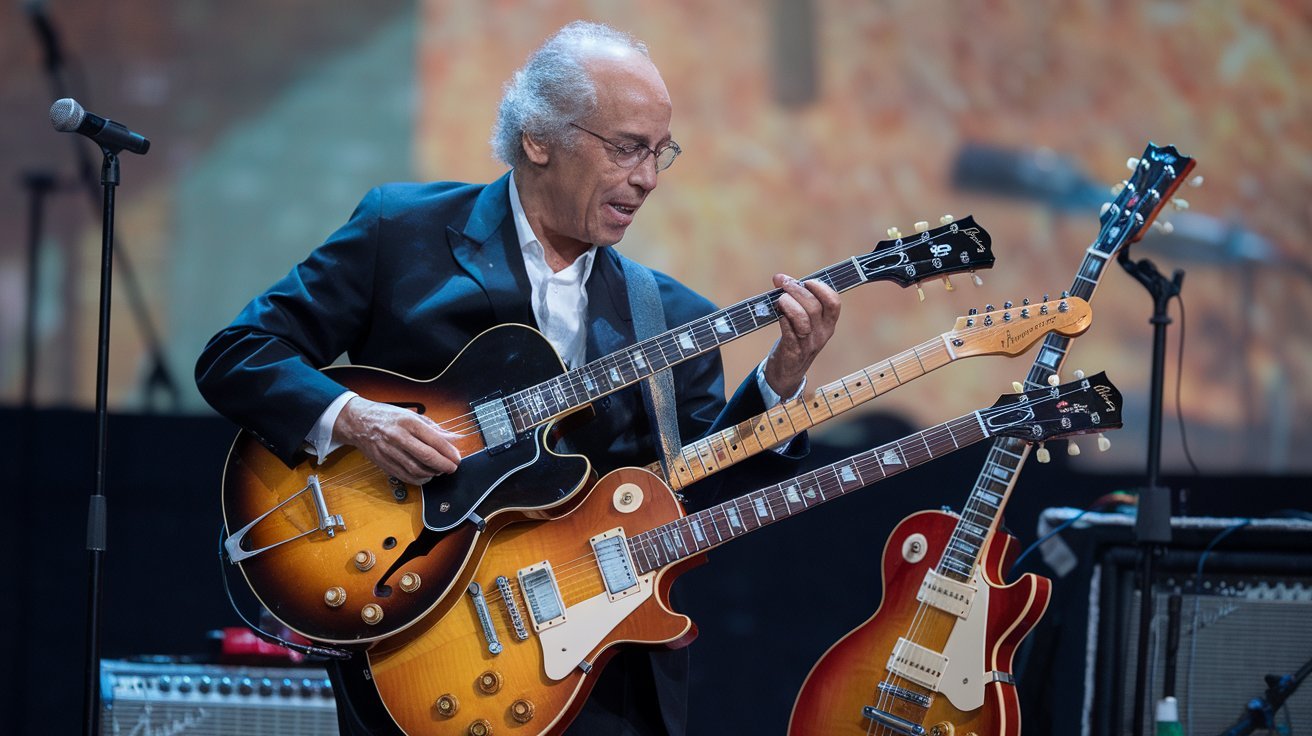
When we talk about guitarras Larry Carlton, we are talking about a guitar collection built around the musical experience and tonal philosophy of legendary guitarist Larry Carlton, widely associated with the nickname “Mr. 335.” His collaboration with Sire has produced a broad family of electric and acoustic instruments designed to combine classic guitar character with modern playability and specifications.
Today, the Sire Larry Carlton guitar range is considerably larger than the original lineup. The collection includes S-style, single-cut, semi-hollow, T-style, acoustic, headless and other contemporary designs. Sire’s current catalog lists dozens of Larry Carlton models across multiple series, giving players considerably more choice than the original S7, H7 and L7 families.
Whether we are looking for a versatile instrument for blues, jazz, fusion, rock, studio work or everyday playing, the Larry Carlton range offers several distinct approaches to guitar design.
What Are Guitarras Larry Carlton?
The phrase guitarras Larry Carlton generally refers to guitars developed under the Larry Carlton and Sire partnership. Sire explains that Larry Carlton collaborated with the company on its electric and acoustic guitar lineup, combining his experience as a professional guitarist with Sire’s instrument-development capabilities.
The original electric-guitar families established three important directions: the S7, based on the traditional S-style concept; the H7, using a hollow/semi-hollow design; and the L7, offering a Gibson-inspired single-cut approach with modern features.
Over time, the collection expanded substantially. The current Sire Larry Carlton catalog includes H, I, J, L, Q, S, T, X and Y series, alongside acoustic models and newer generations.
This variety means that “Larry Carlton guitar” no longer describes only one particular body style. Instead, it represents a wider family of instruments sharing the Larry Carlton/Sire design connection.
Sire Larry Carlton S Series: Versatile S-Style Guitars
The S Series is one of the most recognizable choices for players who want a versatile, traditional double-cut electric guitar.
The S3, for example, uses a mahogany body, a hard maple C-shaped neck, a rosewood Edgeless™ fingerboard and a 25.5-inch scale. Its pickup configuration combines a Larry Carlton-approved humbucker at the bridge with single-coil pickups in the middle and neck positions.
The result is a guitar designed to cover a wide range of tones. We can use the five-way selector to move between brighter single-coil sounds and fuller humbucker textures, making this type of Larry Carlton guitar useful for blues, pop, fusion, rock and clean playing.
The collection also extends upward into models such as the S7, S7 FM, S7 Vintage and S7 New Gen, as well as newer S7 SW and S7 Ash Top models. The 2026 lineup introduces additional variations, demonstrating how broadly Sire is developing the Larry Carlton platform.
Larry Carlton H7: The Semi-Hollow Choice
For players searching specifically for the characteristic warmth and resonance associated with semi-hollow electric guitars, the Sire Larry Carlton H7 is one of the most important models in the collection.
The H7 features a semi-hollow body with a flame maple top, maple sides and back, and a maple center block. It uses a mahogany C-shaped neck, a 24.75-inch scale, an ebony Edgeless™ fingerboard and medium-jumbo frets.
Its electronics are equally significant. The H7 uses a Larry Carlton Vintage Humbucker Set, with two volume controls, two tone controls and a three-way toggle. This configuration gives us independent control over the two pickups and allows the guitar to move between warm neck sounds, brighter bridge tones and blended settings.
The H7 is therefore particularly attractive for jazz, blues, fusion and smooth lead guitar, while remaining capable of handling many rock and contemporary applications.
The current range also includes variants such as the H7F, H7T and H7V, together with left-handed versions in the broader catalog.
Larry Carlton L Series: Classic Single-Cut Character
The L Series provides another important interpretation of the Larry Carlton concept. Sire originally described the L7 as a Gibson-type design with added modern sensibility.
This makes the L family particularly interesting for guitarists who want a substantial single-cut feel while still benefiting from modern Sire specifications.
The current collection includes models such as the L3 HH, L3 P90, L7, L7V, L7 New Gen and L7V New Gen. The 2026 lineup adds the L5 and L7dx, expanding the choices available to players who prefer this body style.
The L3 P90 is especially relevant for musicians who prefer the punchier, more open response associated with P90-style pickups, while dual-humbucker versions provide a thicker and smoother sound.
New Larry Carlton Guitars in 2026
The Larry Carlton collection has continued expanding in 2026, with Sire officially highlighting several new models. The current 2026 lineup includes the L5, L7dx, Q7 Hollow, S7 Ash Top, S7 SW, S1, T7 SW and X1.
These additions demonstrate that the range is moving beyond traditional designs.
The Q7 Hollow brings a different hollow-body direction, while the T7 SW gives players a T-style option. The X1 belongs to a more contemporary design family, showing that the Larry Carlton name is now associated with instruments suitable for both traditional and modern players.
Sire also lists X6 six-string and seven-string headless guitars, providing an option for guitarists who want a compact contemporary instrument with an extended-range alternative.
The New Gen collection similarly includes the L7 New Gen, L7V New Gen, S3 New Gen, S3 HSS New Gen, S7 New Gen, S7 FM New Gen, S7 HSS New Gen, T3 New Gen and T7 New Gen.
Which Larry Carlton Guitar Should We Choose?
Choosing among guitarras Larry Carlton becomes much easier when we first determine the playing style and sound we want.
For maximum traditional versatility, an S Series model is a strong starting point. Its double-cutaway format and multiple pickup options make it suitable for many musical situations.
If our priority is warm, smooth and expressive tones, the H7 semi-hollow is particularly compelling. Its semi-hollow construction and dual humbuckers make it a natural fit for jazz, blues and fusion.
If we prefer a single-cut guitar, the L Series offers several choices, including humbucker and P90 configurations. Players seeking a modern instrument can also explore the X Series, while T-style enthusiasts can consider the T Series.
We should also pay attention to the neck profile, scale length, pickup configuration, body construction and overall weight. Sire’s published specifications show noticeable differences among models. For example, the listed weights include approximately 3.66 kg for the S3, 3.77 kg for the S7, 3.91 kg for the H7 and 3.94 kg for the L7.
Why Guitarras Larry Carlton Remain Popular
The continuing appeal of Larry Carlton guitars comes from their combination of recognizable traditional designs, modern specifications and a broad selection of models.
We can choose from relatively accessible instruments such as the S1 and X1, mid-range models such as the S3 and L3, and more advanced instruments reaching substantially higher price points. Sire’s current Larry Carlton collection spans approximately $200 to $1,500 in its displayed price filters, with individual models covering different positions within that range.
The collection also extends into acoustic instruments, including A3, A4 and G5 models, meaning the Larry Carlton name is not limited to electric guitars.
For musicians, this breadth is one of the biggest advantages. Rather than forcing every player toward one signature design, the range gives us multiple ways to approach the Larry Carlton concept.
Final Thoughts on Guitarras Larry Carlton
Guitarras Larry Carlton now represent a broad and evolving guitar family rather than a single signature instrument. From the versatile S3 and S7 to the semi-hollow H7, classic-inspired L Series, T-style models and newer Q and X Series instruments, there is considerable choice for different musical requirements.
The 2026 additions further expand that selection, while the New Gen models demonstrate Sire’s continuing development of the platform.
For us, the best Larry Carlton guitar ultimately depends on the sound, body style, pickup configuration and playing experience we want. By comparing those characteristics rather than choosing solely by appearance or artist association, we can find a model that genuinely fits our music and playing style.
The spelling “chosing” is a common mistake, while “choosing” is the correct standard English spelling. The confusion is understandable because the base verb choose changes its spelling when we add the -ing ending. Instead of simply removing the final letter, we keep the double oo and remove only the final silent e, producing choosing.
Understanding the difference between chosing and choosing is useful for students, professionals, bloggers, content creators, and anyone who wants to write clear English. The correct form appears in sentences such as “We are choosing a new restaurant,” “She is choosing her favorite color,” and “They are choosing the best option.”
In modern English, choosing is the standard spelling. Chosing is generally considered a misspelling and should be avoided in formal and informal writing.
Chosing or Choosing: Which Is Correct?
The correct spelling is choosing.
The word comes from the verb choose, which means to select or decide between two or more possibilities. When we add -ing to create the present participle or gerund, the final silent e is removed:
choose + ing = choosing
The result contains two o’s followed by s, giving us:
C-H-O-O-S-I-N-G
The incorrect form chosing removes too much from the original word. It drops one of the two o’s, even though the spelling rule does not require us to do that.
Here are some correct examples:
- We are choosing a new laptop.
- She is choosing between two dresses.
- They are choosing where to go for dinner.
- I am choosing the best answer.
- The committee is choosing a new leader.
In each sentence, choosing describes an action that is happening or continuing.
Why Is “Choosing” Spelled With Two O’s?
The easiest way to understand the spelling is to start with the base word choose.
The word contains two o’s:
CHOOSE
When we add -ing, the final silent e is removed:
CHOOSE → CHOOS + ING → CHOOSING
The two o’s remain because they are part of the original spelling of choose.
This is different from simply shortening the word by removing letters arbitrarily. English spelling rules often require us to preserve the pronunciation and structure of the base word.
Compare these examples:
- choose → choosing
- use → using
- move → moving
- write → writing
- make → making
- take → taking
The same general principle explains why choose becomes choosing rather than “chosing.”
A useful memory trick is to remember that choose has two o’s, and choosing keeps both of them.
What Does “Choosing” Mean?
Choosing is the present participle or gerund form of the verb choose. It describes the act of selecting one possibility, person, object, action, or outcome from several alternatives.
For example, if we have three restaurants available and decide to eat at one of them, we are choosing a restaurant.
The word can describe simple everyday decisions as well as significant choices.
Examples include:
- Choosing what to eat for breakfast
- Choosing a university
- Choosing a career
- Choosing a new home
- Choosing a gift
- Choosing a color
- Choosing between two products
- Choosing the best solution to a problem
The decision may be quick or complicated. The important point is that choosing involves selection or decision-making.
The word can also be used figuratively. Someone might say, “We are choosing happiness,” meaning that they are deliberately adopting a particular attitude or approach.
Examples of “Choosing” in Everyday Sentences
Seeing the correct spelling in different contexts makes it easier to remember.
Everyday Decisions
We are choosing what to cook for dinner tonight.
Shopping
She is choosing a new pair of shoes.
Education
The students are choosing their courses for next semester.
Work
The manager is choosing the best candidate for the position.
Travel
We are choosing between two destinations for our vacation.
Technology
He is choosing a new phone based on its features and price.
Personal Decisions
I am choosing to spend more time with my family.
These examples demonstrate that choosing can be followed by an object, a noun phrase, or sometimes a structure such as “choosing to” + verb.
Common Mistakes With “Chosing”
The most common error is writing chosing with only one o. Because the word is pronounced relatively quickly in normal conversation, writers may accidentally omit one of the letters.
The incorrect spelling may appear in searches, social media posts, informal messages, and even drafts of professional documents. However, recognizing it as a spelling error helps us correct it before publishing.
Another mistake is confusing choose, chose, and chosen.
These three forms are related but have different grammatical uses:
- Choose — present tense: “We choose the best option.”
- Chose — simple past: “We chose the best option yesterday.”
- Chosen — past participle: “We have chosen the best option.”
- Choosing — present participle/gerund: “We are choosing the best option.”
This distinction is particularly important because choose has an irregular past tense. The past form is chose, not “choosed.”
For example:
Today: We choose.
Yesterday: We chose.
Already decided: We have chosen.
Currently deciding: We are choosing.
Learning these four forms together makes the spelling and grammar much easier to remember.
Choosing vs. Chosing: Quick Comparison
| Form | Correct? | Example |
|---|---|---|
| Choosing | Yes | We are choosing a restaurant. |
| Chosing | No, generally a misspelling | Avoid this spelling. |
| Choose | Yes | We choose carefully. |
| Chose | Yes | We chose yesterday. |
| Chosen | Yes | We have chosen our option. |
The key spelling rule is straightforward: choose → choosing.
If we remember that both original o’s stay in the word, we can avoid the most common mistake.
How to Remember the Correct Spelling
A simple memory technique is to focus on the word “choose.” Imagine the word visually:
CHOOSE
Now add -ing, but remove only the final e:
CHOOS + ING = CHOOSING
We can also connect the spelling to the phrase “two O’s to choose.” The word choose has two o’s, and choosing keeps those two o’s.
Another useful strategy is to associate the word with its related forms:
choose → chose → chosen → choosing
Writing these forms together makes it easier to recognize the correct spelling.
When proofreading, we should pay particular attention to words ending in -ing because missing letters can be difficult to notice when reading quickly. A spelling checker can identify “chosing,” but understanding the underlying rule is more useful because it prevents the error in future writing.
Frequently Asked Questions About Chosing and Choosing
Is “chosing” a correct word?
No. Chosing is generally considered a misspelling. The correct form is choosing.
Why is choosing spelled with two o’s?
Because the base word choose contains two o’s. When we add -ing, only the final silent e is removed, leaving choosing.
What is the difference between choose and choosing?
Choose is the base or present-tense form, while choosing is the present participle or gerund. For example, “We choose carefully” and “We are choosing carefully.”
Is chose the past tense of choose?
Yes. The past tense of choose is chose. For example: “We chose the blue option yesterday.”
Is chosen the past tense of choose?
Chosen is the past participle, normally used with auxiliary verbs. For example: “We have chosen the blue option.”
How can we remember choosing?
Remember that choose has two o’s. When adding -ing, remove the final e but keep both o’s: choose → choosing.
Conclusion: Choosing Is the Correct Spelling
When deciding between chosing or choosing, the correct modern English spelling is choosing. The word is formed from choose by removing the final silent e and adding -ing, while retaining both o’s.
The incorrect spelling chosing is common because the word can be pronounced quickly and the second o may be accidentally omitted. However, the correct form is easy to remember:
CHOOSE → CHOOSING
Whether we are choosing a career, choosing a product, choosing a destination, choosing an answer, or choosing between alternatives, the spelling remains the same.
Remembering the related forms choose, chose, chosen, and choosing also helps us use the word correctly in both everyday and professional writing. When accuracy matters, choosing is the form to use.


 Business3 months ago
Tips for First-Time Chauffeur Service Users
- Tech1 month ago
TUF Gaming Laptop with Drivers in the Internet: The Complete 2026 Guide
- Blog3 months ago
Almawadahit.com Blog: A Guide to Modern Online Blogging and Digital Content in 2026
- Celebrity3 months ago
Erin Wagner: Biography, Career, Achievements, and Lasting Influence
- Blog3 months ago
Shiny or Shiny: The Complete 2026 Guide to Creating Stunning AI Images with ChatGPT, Picfont, and Image Compression Tools
- Business3 months ago
Voozon: Complete Guide, Meaning, Features, Benefits, and Everything You Need to Know
- Celebrity3 months ago
Solluminati Age (2026): Biography, Real Name, Birthday, Career, Height, and Life Story
- Business3 months ago
Totaling vs Totalling: The Complete 2026 Guide to the Correct Spelling and Usage