Entertainment
Chosing or Choosing: Which Spelling Is Correct?

The spelling “chosing” is a common mistake, while “choosing” is the correct standard English spelling. The confusion is understandable because the base verb choose changes its spelling when we add the -ing ending. Instead of simply removing the final letter, we keep the double oo and remove only the final silent e, producing choosing.
Understanding the difference between chosing and choosing is useful for students, professionals, bloggers, content creators, and anyone who wants to write clear English. The correct form appears in sentences such as “We are choosing a new restaurant,” “She is choosing her favorite color,” and “They are choosing the best option.”
In modern English, choosing is the standard spelling. Chosing is generally considered a misspelling and should be avoided in formal and informal writing.
Chosing or Choosing: Which Is Correct?
The correct spelling is choosing.
The word comes from the verb choose, which means to select or decide between two or more possibilities. When we add -ing to create the present participle or gerund, the final silent e is removed:
choose + ing = choosing
The result contains two o’s followed by s, giving us:
C-H-O-O-S-I-N-G
The incorrect form chosing removes too much from the original word. It drops one of the two o’s, even though the spelling rule does not require us to do that.
Here are some correct examples:
- We are choosing a new laptop.
- She is choosing between two dresses.
- They are choosing where to go for dinner.
- I am choosing the best answer.
- The committee is choosing a new leader.
In each sentence, choosing describes an action that is happening or continuing.
Why Is “Choosing” Spelled With Two O’s?
The easiest way to understand the spelling is to start with the base word choose.
The word contains two o’s:
CHOOSE
When we add -ing, the final silent e is removed:
CHOOSE → CHOOS + ING → CHOOSING
The two o’s remain because they are part of the original spelling of choose.
This is different from simply shortening the word by removing letters arbitrarily. English spelling rules often require us to preserve the pronunciation and structure of the base word.
Compare these examples:
- choose → choosing
- use → using
- move → moving
- write → writing
- make → making
- take → taking
The same general principle explains why choose becomes choosing rather than “chosing.”
A useful memory trick is to remember that choose has two o’s, and choosing keeps both of them.
What Does “Choosing” Mean?
Choosing is the present participle or gerund form of the verb choose. It describes the act of selecting one possibility, person, object, action, or outcome from several alternatives.
For example, if we have three restaurants available and decide to eat at one of them, we are choosing a restaurant.
The word can describe simple everyday decisions as well as significant choices.
Examples include:
- Choosing what to eat for breakfast
- Choosing a university
- Choosing a career
- Choosing a new home
- Choosing a gift
- Choosing a color
- Choosing between two products
- Choosing the best solution to a problem
The decision may be quick or complicated. The important point is that choosing involves selection or decision-making.
The word can also be used figuratively. Someone might say, “We are choosing happiness,” meaning that they are deliberately adopting a particular attitude or approach.
Examples of “Choosing” in Everyday Sentences
Seeing the correct spelling in different contexts makes it easier to remember.
Everyday Decisions
We are choosing what to cook for dinner tonight.
Shopping
She is choosing a new pair of shoes.
Education
The students are choosing their courses for next semester.
Work
The manager is choosing the best candidate for the position.
Travel
We are choosing between two destinations for our vacation.
Technology
He is choosing a new phone based on its features and price.
Personal Decisions
I am choosing to spend more time with my family.
These examples demonstrate that choosing can be followed by an object, a noun phrase, or sometimes a structure such as “choosing to” + verb.
Common Mistakes With “Chosing”
The most common error is writing chosing with only one o. Because the word is pronounced relatively quickly in normal conversation, writers may accidentally omit one of the letters.
The incorrect spelling may appear in searches, social media posts, informal messages, and even drafts of professional documents. However, recognizing it as a spelling error helps us correct it before publishing.
Another mistake is confusing choose, chose, and chosen.
These three forms are related but have different grammatical uses:
- Choose — present tense: “We choose the best option.”
- Chose — simple past: “We chose the best option yesterday.”
- Chosen — past participle: “We have chosen the best option.”
- Choosing — present participle/gerund: “We are choosing the best option.”
This distinction is particularly important because choose has an irregular past tense. The past form is chose, not “choosed.”
For example:
Today: We choose.
Yesterday: We chose.
Already decided: We have chosen.
Currently deciding: We are choosing.
Learning these four forms together makes the spelling and grammar much easier to remember.
Choosing vs. Chosing: Quick Comparison
| Form | Correct? | Example |
|---|---|---|
| Choosing | Yes | We are choosing a restaurant. |
| Chosing | No, generally a misspelling | Avoid this spelling. |
| Choose | Yes | We choose carefully. |
| Chose | Yes | We chose yesterday. |
| Chosen | Yes | We have chosen our option. |
The key spelling rule is straightforward: choose → choosing.
If we remember that both original o’s stay in the word, we can avoid the most common mistake.
How to Remember the Correct Spelling
A simple memory technique is to focus on the word “choose.” Imagine the word visually:
CHOOSE
Now add -ing, but remove only the final e:
CHOOS + ING = CHOOSING
We can also connect the spelling to the phrase “two O’s to choose.” The word choose has two o’s, and choosing keeps those two o’s.
Another useful strategy is to associate the word with its related forms:
choose → chose → chosen → choosing
Writing these forms together makes it easier to recognize the correct spelling.
When proofreading, we should pay particular attention to words ending in -ing because missing letters can be difficult to notice when reading quickly. A spelling checker can identify “chosing,” but understanding the underlying rule is more useful because it prevents the error in future writing.
Frequently Asked Questions About Chosing and Choosing
Is “chosing” a correct word?
No. Chosing is generally considered a misspelling. The correct form is choosing.
Why is choosing spelled with two o’s?
Because the base word choose contains two o’s. When we add -ing, only the final silent e is removed, leaving choosing.
What is the difference between choose and choosing?
Choose is the base or present-tense form, while choosing is the present participle or gerund. For example, “We choose carefully” and “We are choosing carefully.”
Is chose the past tense of choose?
Yes. The past tense of choose is chose. For example: “We chose the blue option yesterday.”
Is chosen the past tense of choose?
Chosen is the past participle, normally used with auxiliary verbs. For example: “We have chosen the blue option.”
How can we remember choosing?
Remember that choose has two o’s. When adding -ing, remove the final e but keep both o’s: choose → choosing.
Conclusion: Choosing Is the Correct Spelling
When deciding between chosing or choosing, the correct modern English spelling is choosing. The word is formed from choose by removing the final silent e and adding -ing, while retaining both o’s.
The incorrect spelling chosing is common because the word can be pronounced quickly and the second o may be accidentally omitted. However, the correct form is easy to remember:
CHOOSE → CHOOSING
Whether we are choosing a career, choosing a product, choosing a destination, choosing an answer, or choosing between alternatives, the spelling remains the same.
Remembering the related forms choose, chose, chosen, and choosing also helps us use the word correctly in both everyday and professional writing. When accuracy matters, choosing is the form to use.
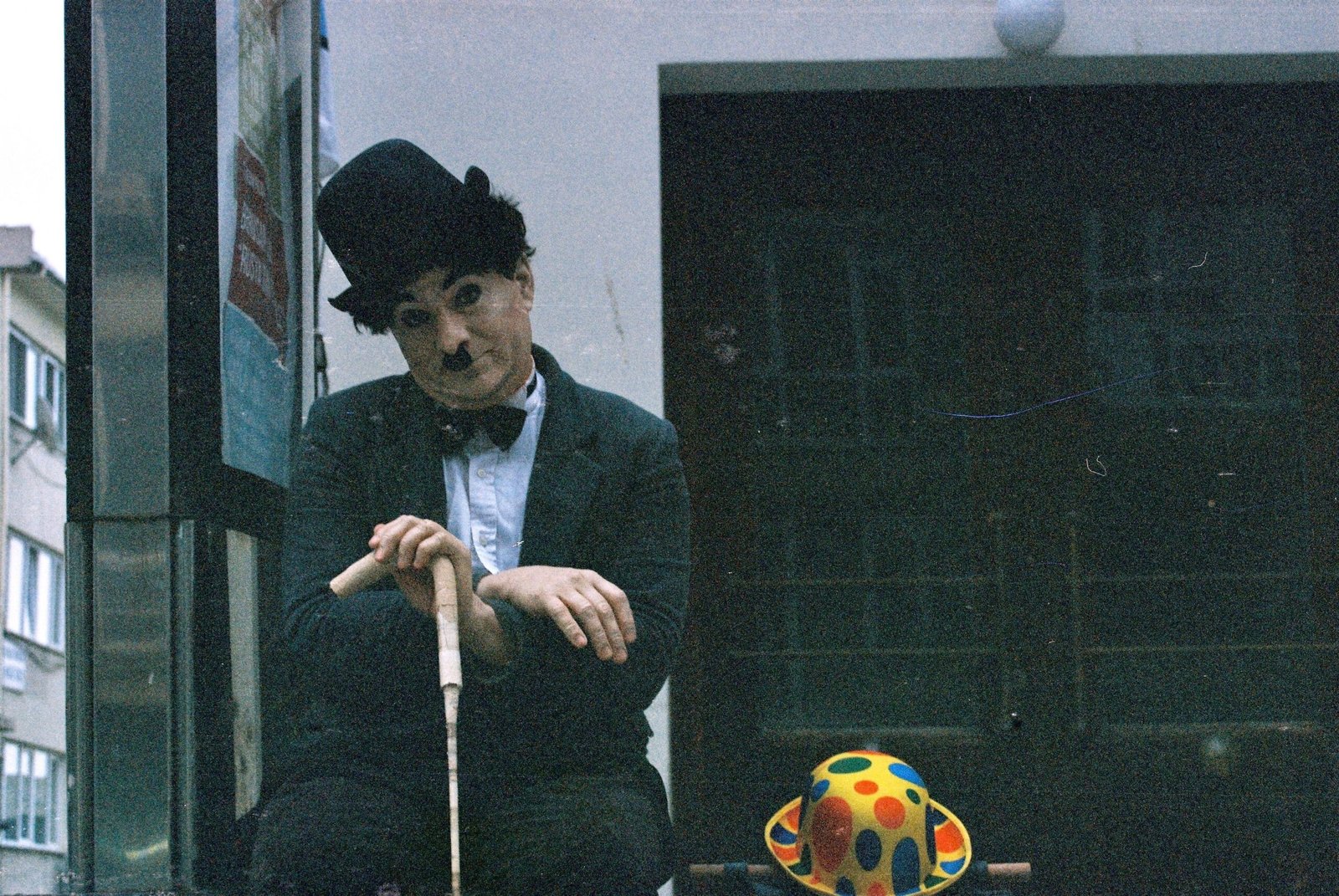
Charlie Chaplin remains one of the most influential figures in the history of cinema. Known for his distinctive bowler hat, toothbrush moustache, oversized shoes, and expressive physical comedy, Charlie Chaplin transformed silent filmmaking into a powerful form of storytelling that crossed cultural and linguistic boundaries. As an actor, filmmaker, comedian, writer, composer, and producer, he helped establish many of the techniques that continue to shape modern entertainment.
Born in London in 1889, Chaplin rose from a difficult childhood to become an international film star during the early twentieth century. His iconic character, the Tramp, combined humour, dignity, vulnerability, and resilience, allowing audiences to laugh at life’s hardships while recognizing the humanity of people living on society’s margins. His most celebrated films, including The Kid, The Gold Rush, City Lights, Modern Times, and The Great Dictator, demonstrate his extraordinary ability to blend comedy with emotional depth and social commentary.
By examining Charlie Chaplin’s early life, rise to fame, major movies, filmmaking innovations, personal experiences, and enduring influence, we can better understand why his work continues to attract audiences in 2026.
Who Was Charlie Chaplin? Early Life and Family Background
Full name: Sir Charles Spencer Chaplin
Born: April 16, 1889
Birthplace: London, England
Died: December 25, 1977
Profession: Actor, director, screenwriter, producer, composer, and comedian
Best known for: The Tramp character and pioneering silent-film comedy
Charlie Chaplin was born in London, England, to parents who worked in the entertainment industry. His mother, Hannah Chaplin, was a music-hall performer, while his father, Charles Chaplin Sr., was a singer and entertainer. Despite their professional backgrounds, Chaplin’s childhood was marked by financial hardship, family instability, and periods of separation from his parents.
His mother’s declining health and difficulties earning a living created serious challenges for the family. Chaplin and his half-brother, Sydney, experienced periods of poverty and institutional care. These early experiences exposed him to the struggles of working-class life, an influence that later became central to his films.
Chaplin discovered his performing abilities at a young age. He began appearing on stage as a child and gradually developed the timing, gestures, facial expressions, and physical agility that would define his career. Working in British music halls helped him understand how to hold an audience’s attention without relying on elaborate dialogue.
His difficult upbringing also influenced the emotional dimension of his comedy. Beneath the laughter in many Chaplin films lies a recurring concern with hunger, loneliness, inequality, and the desire for acceptance. Rather than presenting poverty solely as a source of misery, he often used humour to reveal the resourcefulness and dignity of people facing difficult circumstances.
These experiences provided the foundation for a performer who could communicate complex emotions through a simple movement, a carefully timed pause, or a glance toward the camera.
Charlie Chaplin’s Rise to Fame in Hollywood
Chaplin’s journey from London’s music halls to international stardom began with his stage work in the Fred Karno comedy company. Touring the United States with the troupe exposed him to American audiences and created opportunities in the rapidly expanding motion-picture industry. In 1913, he accepted a contract with Keystone Studios, marking the beginning of his professional film career.
His first released film, Making a Living (1914), introduced audiences to his screen presence. Soon afterward, he developed the character that would define his career. In Kid Auto Races at Venice (1914), audiences saw the distinctive costume that became synonymous with Chaplin: a bowler hat, small moustache, loose trousers, oversized shoes, and a cane.
The character’s success came from its contradictions. The Tramp appeared clumsy but possessed remarkable ingenuity, behaved with confidence despite frequent humiliation, and pursued romance and prosperity despite repeated disappointment. His physical appearance was instantly recognizable, while his gestures communicated emotions that audiences could understand without dialogue.
Chaplin continued developing his craft at Essanay Studios, Mutual Film Corporation, and First National. As his popularity increased, he gained greater creative independence and assumed more responsibility for directing, writing, editing, and producing his films.
In 1919, Chaplin joined Mary Pickford, Douglas Fairbanks, and D. W. Griffith in establishing United Artists, a company created to give leading filmmakers greater control over their work and its distribution. This move reflected his ambition to become more than a performer: he wanted to shape every important element of the filmmaking process.
Charlie Chaplin’s Most Famous Movies and Achievements
Chaplin’s filmography contains some of the most celebrated works in cinematic history. His films combined visual comedy with emotional storytelling, social criticism, and memorable performances.
The Kid (1921): This feature-length film combines comedy and drama through the relationship between the Tramp and an abandoned child played by Jackie Coogan. It established Chaplin’s ability to balance laughter with powerful emotional moments.
The Gold Rush (1925): Set against the hardships of the Klondike Gold Rush, the film turns hunger, isolation, and the pursuit of wealth into unforgettable comedy. Its famous dinner-roll dance remains one of Chaplin’s signature routines.
City Lights (1931): Released after sound cinema had become established, this largely silent romantic comedy follows the Tramp’s relationship with a blind flower seller. Its emotional conclusion demonstrates Chaplin’s mastery of visual storytelling.
Modern Times (1936): This film explores industrialization, repetitive factory work, unemployment, and the challenges faced by ordinary people in a mechanized society. Its humour also offers a pointed critique of treating human beings as components of a production system.
The Great Dictator (1940): Chaplin’s first major full-length talking film featured a satirical portrayal of fascism and authoritarian leadership. By challenging political extremism through comedy, he demonstrated that entertainment could address urgent moral and political questions.
Limelight (1952): This reflective drama follows an ageing music-hall performer confronting professional decline and personal despair. It explores artistic identity, compassion, and the difficulty of accepting change.
These films reveal Chaplin’s evolution from a popular silent comedian into a sophisticated filmmaker. His work could entertain children, engage adult audiences, and encourage reflection on poverty, social inequality, ambition, and human dignity. The British Film Institute’s filmography documents the breadth of his work across several decades.
Charlie Chaplin’s Unique Comedy Style and Filmmaking Techniques
Chaplin’s comedy relied on physical expression, precise timing, visual contrast, and emotional authenticity. Rather than depending on spoken jokes, he transformed everyday situations into elaborate sequences of misunderstandings, unexpected movements, and carefully constructed visual gags.
A simple walk, a stumble, or a raised eyebrow could communicate embarrassment, defiance, affection, or disappointment. Chaplin understood that comedy became more effective when audiences cared about the character experiencing the problem.
His filmmaking process was famously meticulous. He frequently refined scenes through repeated takes and adjustments, searching for the exact movement or rhythm that would produce the intended emotional effect. This attention to detail helped distinguish his work from the faster, more improvisational comedies of the early film industry.
Chaplin also contributed musically to his productions. Although he became internationally famous during the silent-film era, he composed music for several later releases and added scores to earlier works. Music became an essential part of the atmosphere and emotional structure of his films.
His willingness to preserve visual storytelling even after talking pictures became popular demonstrated his confidence in cinema’s ability to communicate across languages. City Lights is a particularly strong example of this approach.
Ultimately, Chaplin’s greatest innovation was the combination of slapstick comedy and human vulnerability. He made audiences laugh at misfortune while encouraging them to sympathize with those who experienced it. That balance continues to influence comedians, actors, directors, and animators.
Charlie Chaplin’s Personal Life, Later Years, and Legacy
Chaplin’s personal life attracted considerable public attention throughout his career. He married four times and had eleven children. His final marriage was to Oona O’Neill, whom he married in 1943. The couple eventually settled in Switzerland with their family.
Despite his professional success, Chaplin faced political controversy in the United States during the Cold War. His political views, public statements, and personal controversies attracted scrutiny. In 1952, while travelling to Europe, he learned that his permission to re-enter the United States would be subject to review. He subsequently made his home in Switzerland.
In his later years, Chaplin continued working on films, music, and writing. His contributions received renewed recognition when he returned to the United States in 1972 to receive an honorary Academy Award for his influence on motion pictures. In 1975, Queen Elizabeth II knighted him, formally recognizing his contributions to the performing arts.
Charlie Chaplin died on December 25, 1977, at the age of 88, at his home in Corsier-sur-Vevey, Switzerland. His death marked the end of a remarkable life that had spanned the development of modern cinema from its early silent years to the era of sophisticated sound filmmaking.
His legacy remains visible in contemporary entertainment. Filmmakers continue to draw inspiration from his visual storytelling, physical comedy, character development, and ability to address serious subjects through humour. His films also preserve a distinctive record of social and economic anxieties during the early twentieth century.
More than a century after the emergence of the Tramp, Chaplin’s work remains accessible because its central themes are universal. People continue to experience loneliness, economic uncertainty, romantic disappointment, and the desire for a better life. Chaplin transformed those experiences into stories that combine laughter with compassion.
Conclusion: Why Charlie Chaplin Remains a Cinema Legend in 2026
Charlie Chaplin importance extends far beyond his status as a celebrated comedian. He helped establish the artistic possibilities of motion pictures, demonstrated the commercial value of creative independence, and proved that visual comedy could communicate meaningful ideas without extensive dialogue.
From The Kid and The Gold Rush to Modern Times and The Great Dictator, his films explored the relationship between individuals and society while preserving the humour that made his performances distinctive. His influence on acting, directing, music, and visual storytelling continues to make him an essential figure in film history.
In 2026, Charlie Chaplin remains a lasting symbol of cinematic creativity, resilience, and humanity. His career demonstrates how entertainment can transcend generations, languages, and cultural boundaries while offering audiences both laughter and a deeper understanding of the human condition.
For anyone exploring the history of cinema, Chaplin’s life and films provide an invaluable introduction to the power of storytelling and the enduring appeal of a performer who made the world laugh, think, and feel.

Sight Reading Factory is an online music education platform designed to help musicians improve their sight-reading skills through customizable musical exercises. It provides students, teachers, instrumentalists, vocalists, and music educators with a practical way to practice reading unfamiliar music and develop greater confidence when performing. Instead of relying exclusively on printed exercises that students may eventually memorize, the platform can generate new musical examples to support repeated practice and ongoing development.
Sight-reading is an essential skill in music. It involves reading and performing a piece of music that a musician has not previously studied in detail. This requires the ability to recognize notes, understand rhythms, interpret musical symbols, maintain a steady tempo, and translate written notation into sound. Developing these abilities takes consistent practice, and Sight Reading Factory aims to make that process more structured, accessible, and adaptable to different skill levels.
In 2026, digital music-learning tools remain useful for classroom instruction, private lessons, independent practice, and ensemble preparation. Sight Reading Factory addresses a common challenge faced by music educators: providing enough fresh, appropriately challenging material for every student. By allowing exercises to be customized, the platform can support individualized learning while helping teachers organize regular sight-reading activities.
What Is Sight Reading Factory?
Sight Reading Factory is an online platform focused on building music-reading proficiency through generated exercises. It is designed for use across different musical contexts, including instrumental performance and vocal study. Its main purpose is to give learners opportunities to practice reading unfamiliar notation rather than depending on a small collection of repeatedly used examples.
Traditional sight-reading instruction often involves textbooks, worksheets, method books, and exercises selected by a teacher. These resources remain valuable, but students may become familiar with the same passages after practicing them several times. A platform that generates new examples can help reduce that familiarity and encourage musicians to apply their reading skills to fresh material.
Sight Reading Factory helps make music practice repeatable and customizable. Depending on the selected instrument, exercise type, and available account features, users can work with settings that determine aspects of the musical material. This allows practice to focus on particular learning objectives rather than presenting every student with the same exercise.
For example, a beginner might concentrate on identifying notes within a limited range and recognizing basic rhythmic patterns. A more experienced musician might practice complicated rhythms, accidentals, wider pitch ranges, or more advanced notation.
The platform is particularly relevant to music teachers who need a consistent way to assign practice and introduce students to unfamiliar music. Students can use it to supplement their regular lessons, while independent musicians can incorporate short reading exercises into their daily routines.
Key Features of Sight Reading Factory
Sight Reading Factory focuses on providing flexible practice material that can be adapted to different musicians and educational goals. Its usefulness comes from the way it supports repeated exposure to unfamiliar notation and allows teachers to organize practice around specific skills.
1. Customizable Music Exercises
One of the platform’s central advantages is the ability to generate exercises based on selected musical parameters. Depending on the exercise type and available settings, users can tailor practice to their instrument, level of difficulty, note range, and rhythmic requirements.
This flexibility helps learners concentrate on areas where they need improvement. A student who struggles with ledger lines, for instance, can focus on reading notes beyond the standard staff. Another student might need more experience recognizing rests, dotted rhythms, or time signatures.
2. Fresh Examples for Repeated Practice
Sight-reading improves when musicians regularly encounter unfamiliar material. Practicing the same passage repeatedly can improve performance of that passage, but it does not always demonstrate whether a learner can transfer those skills to new music.
By providing generated exercises, Sight Reading Factory can help users practice responding to new notation. This encourages active reading instead of relying on memory or muscle familiarity.
3. Support for Music Teachers
Teachers can use sight-reading exercises as part of classroom activities, private lessons, homework assignments, and assessments. Rather than searching through multiple books for an appropriate passage, an educator can use customizable material to target particular learning outcomes.
This can be especially useful in classrooms where students have different levels of experience. Individualized exercises allow teachers to provide additional challenges to advanced musicians while giving beginners manageable material.
4. Instrumental and Vocal Practice
Sight-reading is important for both instrumentalists and singers. Instrumental musicians must connect written notes with fingerings, playing techniques, and physical movements. Vocalists must interpret pitches, intervals, rhythms, and other musical instructions while preparing to sing.
The platform’s available exercise options depend on the selected musical category and account features. Users should check the official website to confirm which instruments, vocal formats, and settings are supported by their current plan.
How to Use Sight Reading Factory Step by Step
Getting started with Sight Reading Factory is straightforward when users approach it with a clear practice objective. The following process provides a useful starting point for beginners, students, and teachers.
Step 1: Visit the Official Website
Open sightreadingfactory.com and review the available options. Check whether you need an individual, student, or educator account for your intended use.
Step 2: Select Your Instrument or Exercise Type
Choose the relevant musical category and review the available settings. Beginners should start with a comfortable note range and simple rhythms rather than choosing the hardest material immediately.
Step 3: Review the Exercise Before Playing
Identify the clef, key signature, time signature, tempo marking, and any unusual rhythmic patterns. Previewing these details helps you prepare without memorizing the entire passage.
Step 4: Perform the Music Without Stopping
Aim to maintain a steady pulse and continue through small mistakes. The objective is to develop the ability to read ahead and recover while performing unfamiliar music.
Step 5: Review Mistakes and Practice Again
Identify recurring difficulties, such as incorrect pitches or uneven rhythms. Adjust the next exercise to address those weaknesses, then gradually increase the difficulty as your accuracy improves.
The most important principle is consistency. A short, focused session several times a week can be more productive than an occasional long session without a specific goal.
Benefits of Sight Reading Factory for Students and Teachers
Sight Reading Factory can support music education by making it easier to practice an important skill consistently. Its benefits depend on how learners use the exercises, how often they practice, and whether the material matches their current abilities.
Improved note recognition: Regular exposure to unfamiliar notation helps musicians recognize notes more quickly. As recognition becomes more automatic, students can devote greater attention to phrasing, expression, and overall musical flow.
Better rhythmic accuracy: Sight-reading requires musicians to interpret note values, rests, ties, and time signatures while maintaining a consistent beat. Targeted exercises can help learners identify rhythmic patterns and perform them more confidently.
Greater performance confidence: Unfamiliar music can feel intimidating, particularly for beginners. Frequent practice helps students become more comfortable approaching new passages without expecting to know every note in advance.
Personalized learning: Students do not all develop at the same pace. Customizable practice allows teachers to focus on individual weaknesses and adjust the level of difficulty as students progress.
More efficient lesson preparation: Educators can use digital exercises to supplement textbooks and printed worksheets. This can reduce the time spent searching for suitable examples and make it easier to assign material that matches a lesson’s objectives.
Independent learning: Musicians who practice outside formal lessons can use structured exercises to establish a routine. By recording personal observations about accuracy, tempo, and recurring mistakes, they can monitor their progress more effectively.
However, the platform works best as a supplement to a broader music education program. It does not replace technique exercises, repertoire study, ear training, musical interpretation, or feedback from an experienced teacher.
Sight Reading Factory Pricing, Free Access, and Subscription Options
A common question is whether Sight Reading Factory is free. The answer depends on the current access options, the type of account, and whether a school or music educator provides access.
The platform has offered different arrangements for individual users and educational institutions. Because prices, trial availability, and subscription conditions can change, we recommend checking the official website rather than relying on outdated pricing information.
Before choosing a plan, consider the following points:
Individual access: Determine whether the available plan suits personal practice and includes the exercise options you need.
Teacher access: Review the tools available for assigning exercises, managing students, and supporting classroom instruction.
School access: Ask whether your school or music department already provides an institutional subscription.
Exercise availability: Confirm that your preferred instrument, vocal category, and customization settings are included.
Renewal and cancellation: Review billing frequency, renewal terms, and cancellation conditions before paying.
Visit Sight Reading Factory’s official website for current account and subscription information.
It is also worth comparing the cost with your expected usage. A music teacher who assigns exercises to several classes may have different needs from a hobbyist who practices piano for ten minutes each day. Choosing a suitable option depends on the features that will genuinely support your learning goals.
Sight Reading Factory vs. Traditional Music Practice Methods
Sight Reading Factory and traditional music resources can complement each other, but they serve somewhat different purposes.
| Feature | Sight Reading Factory | Traditional printed exercises |
|---|---|---|
| Exercise variety | Can generate new exercises using available settings | Usually uses a fixed collection of passages |
| Customization | Offers configurable practice options | Depends on the book or worksheet selected |
| Accessibility | Available through a compatible internet-connected device | Can be used without internet access |
| Classroom use | Supports digital exercise-based instruction | Supports printed assignments and in-person work |
| Repeated practice | Useful for encountering unfamiliar examples | Repeated passages can become familiar |
| Learning approach | Digital, customizable practice | Structured lessons and established repertoire |
Neither method is automatically better for every musician. Printed method books often provide carefully sequenced instruction, musical context, and exercises that build progressively on earlier concepts. Digital platforms offer convenience and the possibility of practicing with a wide range of generated examples.
The strongest approach combines both methods. Students can use Sight Reading Factory to develop fluency with unfamiliar notation while studying scales, technical exercises, and complete musical works through traditional instruction.
Musicians should also practice reading music away from their primary instrument when appropriate. Silently identifying notes, tapping rhythms, and recognizing intervals can strengthen foundational skills before a passage is performed.
Best Tips for Improving Sight-Reading Skills in 2026
Using Sight Reading Factory regularly is helpful, but the quality of practice matters as much as the number of exercises completed. A thoughtful routine helps musicians build accuracy, confidence, and consistency over time.
Start below your maximum ability. Choose exercises that challenge you without making every measure difficult. If you repeatedly lose the beat or cannot identify basic notes, reduce the complexity until you can maintain a steady performance.
Look ahead while playing. Effective sight-reading involves reading slightly ahead of the notes being performed. This gives the brain time to process upcoming rhythms and pitches instead of reacting only after each note has passed.
Maintain a steady tempo. Beginners often stop whenever they make a mistake. During sight-reading practice, try to continue through small errors and return to the correct position at the next opportunity. This develops musical continuity.
Recognize patterns instead of isolated notes. Scales, arpeggios, repeated rhythms, and familiar intervals appear throughout written music. Recognizing these patterns reduces the mental effort required to process every note separately.
Practice consistently. Set aside five to fifteen minutes for focused sight-reading on most practice days, adjusting the duration to your experience and schedule. Brief sessions make it easier to maintain concentration and establish a lasting habit.
Review mistakes after performing. Once the exercise is complete, identify the most important errors. Determine whether they came from poor note recognition, unfamiliar rhythms, instrument technique, or difficulty maintaining the pulse. Use that information to choose the next exercise.
Finally, measure progress over several weeks rather than judging your ability by one difficult passage. Increasing accuracy, improved rhythm, and greater confidence when encountering new music are meaningful signs of development.
Frequently Asked Questions About Sight Reading Factory
What is Sight Reading Factory used for?
Sight Reading Factory is used to practice reading unfamiliar musical notation. Students, instrumentalists, vocalists, and music teachers can use its generated exercises to develop note recognition, rhythmic accuracy, and reading fluency.
Can beginners use Sight Reading Factory?
Yes. Beginners can benefit from starting with simple exercises that match their current knowledge of notes, clefs, and rhythms. Gradually increasing difficulty helps them build confidence without becoming overwhelmed.
Is Sight Reading Factory suitable for music teachers?
Yes. The platform is designed to support music education and can help teachers provide practice material suited to different learning objectives. Educators should review the current account features to determine which classroom tools are available.
Does Sight Reading Factory support different instruments?
The platform offers instrument-specific sight-reading options. The exact instruments, exercise categories, and customization features should be confirmed on its official website.
How often should we practice sight-reading?
Regular practice is recommended. Beginners may start with five to ten minutes per session, while more experienced musicians can extend their sessions according to their goals. Consistency and appropriate difficulty are more important than simply completing a large number of exercises.
Conclusion: Is Sight Reading Factory Worth Using in 2026?
Sight Reading Factory is a useful digital resource for musicians who want to improve their sight-reading skills through regular, customizable practice. Its generated exercises can help students encounter unfamiliar notation, strengthen rhythmic accuracy, and become more confident when performing music they have not rehearsed.
For teachers, the platform offers a practical way to supplement lessons and provide students with additional reading opportunities. For independent learners, it can help establish a structured practice routine that targets specific weaknesses and encourages gradual improvement.
The best results come from combining digital exercises with sound musical fundamentals, including scales, ear training, technique, repertoire study, and guidance from qualified instructors. By choosing appropriate exercises, maintaining a steady pulse, reviewing mistakes, and practicing consistently, musicians can make meaningful progress over time.

Donna the Buffalo is an American roots band whose music brings together folk, Americana, country, rock, zydeco, Cajun influences, reggae, and old-time traditions. Formed in the Finger Lakes region of New York, the group has developed a distinctive identity over more than three decades, supported by an unusually dedicated audience and a strong connection to live music and community festivals.
What makes Donna the Buffalo especially interesting is that the band has never depended on a single genre. Its music can move from energetic dance rhythms to Appalachian-inspired fiddle passages, roots-rock arrangements, and songs shaped by Caribbean and Louisiana traditions. At the center of that sound are Tara Nevins and Jeb Puryear, whose songwriting and musicianship have remained fundamental to the group’s identity.
Donna the Buffalo: History and Origins
Donna the Buffalo emerged from the Trumansburg, New York, and Ithaca-area music community in the late 1980s. The group’s history is closely connected with old-time Appalachian music and the local community of musicians who gathered to play traditional styles. AllMusic dates the band’s formation to 1989, while historical accounts describe the project taking shape around 1987–1988 before the band’s first public performances.
Tara Nevins and Jeb Puryear became the central creative partnership. Their musical backgrounds helped establish the combination of fiddle-based traditional music, electric guitar, accordion, percussion, and rhythm that eventually became a defining feature of Donna the Buffalo.
The band’s unusual name also has an unusual story. The musicians initially considered the name “Dawn of the Buffalo,” but it was misunderstood as “Donna the Buffalo.” Instead of correcting the mistake, they adopted the unexpected name. The result became one of the most recognizable names in American roots music.
What Kind of Music Does Donna the Buffalo Play?
Trying to put Donna the Buffalo into one musical category misses much of what makes the group distinctive. The band is commonly associated with roots music, Americana, folk rock, jam music, zydeco, country, and contemporary folk. AllMusic describes its catalog as drawing from rock, jazz, country, zydeco, and folk, while Apple Music emphasizes the group’s mixture of folk, zydeco, and country influences.
The band’s sound is particularly recognizable because traditional instruments and modern rock instrumentation exist side by side. Fiddle, accordion, washboard, acoustic guitar, electric guitar, keyboards, bass, and drums can all contribute to the arrangements.
Tara Nevins’ musical approach is especially important. Her work with fiddle and accordion gives many performances a strong traditional and Louisiana-inspired character, while Jeb Puryear’s guitar playing and songwriting provide another foundation for the band’s roots-rock identity.
The result is music designed not only for listening but also for dancing and communal live experiences. This emphasis has helped Donna the Buffalo remain strongly connected to festivals and touring audiences.
Tara Nevins and Jeb Puryear: The Creative Core
Although Donna the Buffalo has experienced numerous lineup changes throughout its history, Tara Nevins and Jeb Puryear have remained the essential creative figures. Both have contributed vocals and songwriting, while their instrumental roles help define the group’s musical personality.
Nevins is known for vocals, fiddle, accordion, guitar, washboard, and percussion, while Puryear has been strongly associated with vocals and guitar. Their partnership combines different aspects of American roots music without allowing the band to become restricted to one traditional style.
The longevity of that partnership is significant. Many groups change their musical identity dramatically as personnel changes, but Donna the Buffalo has retained recognizable characteristics across different eras. The songwriting partnership has provided an anchor while other musicians have brought new ideas and interpretations to the band’s live and recorded sound.
That combination of continuity and evolution is one reason the group has maintained a dedicated following for so many years.
Donna the Buffalo Albums and Discography
Donna the Buffalo has released a substantial body of work spanning several decades. Among the important releases are The Ones You Love, Rockin’ in the Weary Land, Positive Friction, Life’s a Ride, Silverlined, Tonight, Tomorrow and Yesterday, and Dance in the Street.
The band’s early recordings included The White Tape in 1989 and The Red Tape in 1991, followed by the self-titled 1993 album often referred to as the “Purple CD.” These early releases helped establish the band’s regional following and distinctive roots-oriented approach.
The Ones You Love, released in 1996, became an important part of the band’s catalog. Rockin’ in the Weary Land followed in 1998, and Positive Friction arrived in 2000. The latter remains one of the group’s most frequently highlighted albums when discussing its recorded legacy.
The 2000s brought further development, including Life’s a Ride in 2005 and Silverlined in 2008. In 2013, the group released Tonight, Tomorrow and Yesterday, an album noted for its combination of Americana, folk, zydeco, and roots influences.
The band’s later studio catalog includes Dance in the Street, released in 2018. The album continued the group’s long-standing interest in rhythmic, roots-oriented music and live-feeling performances.
The Herd and Donna the Buffalo’s Live-Music Culture
One of Donna the Buffalo’s greatest achievements is the community surrounding its performances. Fans of the group are commonly known as “The Herd,” a name that reflects the unusually close relationship between the musicians and their audience.
The band’s live reputation is central to its identity. Rather than treating concerts simply as opportunities to reproduce studio recordings, Donna the Buffalo has developed a performance culture centered on energy, improvisation, dancing, and audience participation.
This helps explain why the band has remained relevant to festival audiences even as musical trends have changed. Its concerts can function as social gatherings as much as conventional performances.
For listeners discovering the group in 2026, exploring live recordings can therefore be just as valuable as beginning with the studio albums.
Finger Lakes GrassRoots Festival and Community Legacy
Donna the Buffalo’s connection to festivals goes far beyond performing at them. The musicians helped establish the Finger Lakes GrassRoots Festival of Music and Dance in Trumansburg, New York, in 1991. The festival became an important cultural event and an extension of the band’s community-oriented approach.
The event began as a much smaller community benefit and grew into a major multi-day gathering. Its development demonstrates how Donna the Buffalo’s musical identity has always been connected to community, dancing, cultural exchange, and grassroots organization.
The band’s festival involvement also helped create opportunities for artists from different musical traditions to share audiences. That philosophy mirrors Donna the Buffalo’s own music, which combines American roots traditions with international influences.
This community legacy is an important part of understanding the band. Donna the Buffalo is not simply a recording act; it represents a broader roots-music culture built around live performance and shared experiences.
Why Donna the Buffalo Still Matters in 2026
Donna the Buffalo lasting appeal comes from its ability to combine tradition and experimentation without losing its personality. The group emerged from an old-time music environment but developed a sound that could include zydeco, reggae, country, rock, folk, and Americana.
More than three decades after its formation, the band remains an important example of how an independent roots group can build a lasting audience through songwriting, touring, festivals, and community.
For new listeners, a good introduction can begin with The Ones You Love, Positive Friction, Silverlined, Tonight, Tomorrow and Yesterday, or Dance in the Street, followed by live performances to understand the band’s festival-oriented energy.
Ultimately, Donna the Buffalo represents more than a particular genre. Its history demonstrates the power of musicians who preserve traditional influences while continually reshaping them. Through Tara Nevins, Jeb Puryear, its changing ensemble, devoted Herd, extensive touring history, and festival work, the band has created a distinctive place in American roots music that remains recognizable in 2026.


 Tech1 month ago
TUF Gaming Laptop with Drivers in the Internet: The Complete 2026 Guide
- Business4 months ago
Tips for First-Time Chauffeur Service Users
- Celebrity4 months ago
Erin Wagner: Biography, Career, Achievements, and Lasting Influence
- Blog3 months ago
Almawadahit.com Blog: A Guide to Modern Online Blogging and Digital Content in 2026
- Blog3 months ago
Shiny or Shiny: The Complete 2026 Guide to Creating Stunning AI Images with ChatGPT, Picfont, and Image Compression Tools
- Business4 months ago
Voozon: Complete Guide, Meaning, Features, Benefits, and Everything You Need to Know
- Celebrity4 months ago
Luciana Pedraza: A Complete Biography of the Argentine Actress, Director, and Philanthropist
- Celebrity3 months ago
Solluminati Age (2026): Biography, Real Name, Birthday, Career, Height, and Life Story